

Can a Nursing Home Be Liable for a Resident’s Slip-and-Fall Accident?
Yes, a New Mexico nursing home may be held liable if an unsafe condition, inadequate supervision, or a care-plan failure causes a resident’s slip-and-fall. However, a fall alone does not prove negligence. Evidence must connect the facility’s failure to the fall and the resulting harm.
When an Albuquerque nursing home resident suffers a slip-and-fall, families are left with more questions than answers. Examining the situation to determine what may have caused your loved one’s injury, and whether it could have been prevented, the first step toward accountability.
New Mexico law gives residents and their families two years from the date of the incident and injury to pursue a civil nursing home negligence claim. Evidence that may help to support your claim can quickly be lost, misplaced, covered up, or even destroyed. Requesting records and documenting your loved one’s condition from the day of their fall, can help to protect your family’s legal options.
Are Slip-and-Falls Common in Nursing Homes?
Slips are among the more frequent causes of nursing home injuries. Residents face a heightened risk, not because of anything they did, but because of physical and cognitive vulnerabilities the facility is required to accommodate.
- Limited mobility: Residents with weakened muscles or joint conditions often lack the strength to catch themselves once they begin to slip.
- Balance impairments: Conditions such as Parkinson’s disease or inner ear disorders make it difficult to recover from even a minor loss of footing.
- Vision loss: Diminished eyesight prevents a resident from spotting a wet floor, spill, or uneven surface before stepping onto it.
- Dementia and cognitive decline: Confusion or impaired judgment can lead a resident to walk through a hazard that a cognitively intact person would avoid.
- Medication side effects: Sedatives, blood pressure medications, and other drugs commonly cause dizziness or slowed reaction time.
None of these vulnerabilities excuses a facility from maintaining a safe environment.
How Do Slip-and-Falls Differ from Other Nursing Home Falls?
Nursing home falls can happen in one of the common areas with residents or visitors around, and sometimes they may happen when a caregiver is nearby. However, falls may not always be witnessed.
Here are some common ways that nursing home falls may happen:
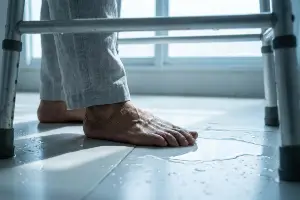
- Slips: Often occur after a spill or after a recent floor cleaning, Resident’s can easily lose traction on a wet, smooth, or slick surface. This type of fall can cause residents to lose their balance and fall backward.
- Trips: Happen in walkways, in living quarters, or in common areas when a resident’s foot catches on an object, such as loose flooring, clutter, or a raised threshold, typically resulting in a forward fall.
- Transfer falls: These types of falls happen when there is insufficient staffing to properly transfer a resident from their bed to the wheelchair or toilet. A transfer fall is more likely to occur when caregivers have been poorly/adequately trained or due to staffing shortages.
- Bed and chair falls: Frail residents, or those prone to balance issues, may fall when they try to stand suddenly or without help.
Can I Sue if a Loved One Got Injured After a Slip and Fall in a Nursing Home?
Yes, a resident or their family may have grounds to pursue a civil claim on behalf of a loved one who was injured during a nursing home slip-and-fall where negligence was a contributing factor.
A claim may exist when the fall resulted from a dangerous condition on the property, inadequate staff supervision, or a failure to implement and follow a resident’s care plan.
The Legal Standard for a Slip-and-Fall Claim
A claim generally rests on ordinary negligence under New Mexico common law, meaning the facility failed to meet the standard of care it owed the resident. Nursing homes must also be licensed under NMSA 1978 § 24-1-5, and facilities that participate in Medicare or Medicaid must meet the federal accident-hazard requirements discussed below.
What Compensation Can I Recover for a Nursing Home Slip-and-Fall in New Mexico?
When a facility’s negligence causes a resident’s slip-and-fall, a family may be able to pursue a civil claim to recover compensation for medical costs and other losses. The types of compensation that may be available depend on the severity of the injury and and the strength of supporting evidence.
Losses Tied Directly to the Injury
Documented losses connected to the fall generally belong to a few recognized categories under New Mexico law.
- Medical treatment: These losses may include emergency care, hospitalization, surgery, and other ongoing treatment costs related to the fall.
- Rehabilitation: Physical therapy or other services needed to restore function after the injury.
- Pain and suffering: Compensation for the physical pain and emotional trauma the resident endured because of the fall.
- Disability or lasting limitations: Some losses could be tied to a permanent reduction in mobility, independence, or overall function.
- Emotional distress and loss of enjoyment of life: Compensation may account for anxiety, fear, or the loss of activities the resident previously enjoyed.
When the Fall Results in Death
If a resident dies from injuries caused by the fall, the resident’s personal representative may bring a separate wrongful death claim on the family’s behalf under the New Mexico Wrongful Death Act (NMSA 1978 § 41-2-1). That claim involves distinct legal requirements and its own category of damages.
What Evidence Do I Need for a Nursing Home Slip-and-Fall Case?
Proving a slip-and-fall claim depends on documentation that shows what caused the fall and what the facility knew, or should have known, beforehand. The following records and materials are particularly relevant to slip-and-fall incidents.
- Surveillance footage: Camera recordings may capture the hazard, the fall itself, or how quickly staff responded.
- Incident reports: The facility should have a written account of the fall, including when and how staff say it occurred.
- Medical records: These document the resident’s injuries and the treatment provided after the fall.
- Care plans: There may be records showing whether the resident’s fall risk was assessed and what precautions were required.
- Facility maintenance records: The facility might have logs showing cleaning schedules, spill responses, or reported hazards in the area where the fall occurred.
- Witness accounts: Staff, other residents, or visitors who saw the hazard or the fall can provide their accounts of what happened.
What Should Families Do After a Nursing Home Slip-and-Fall?
Taking a few practical steps soon after a slip-and-fall can protect both the resident’s health and the family’s legal options. Acting promptly also helps preserve evidence before it can be lost or altered.
- Take photos: Capture images of the area where the incident happened and your loved one’s visible injuries.
- Monitor the resident’s recovery: Ask what treatment plan the facility has put in place since the fall, and keep a written log of any changes in your family member’s condition.
- Record staff communications: Note the names of staff members involved and what they said about how the fall occurred.
- Request recordings and written records: Ask the facility in writing for the incident report and medical records, and send a written request to preserve any surveillance footage.
How Can I Tell if a Nursing Home Was Negligent After a Slip-and-Fall?
The evidence can show what the facility knew about the hazard and how it responded.
What the Evidence Reveals About Facility Knowledge
Evidence may help to reveal the cause of the fall, and the condition of the scene of the fall may often show whether the hazard was foreseeable. A spill left unaddressed for an extended period, or a recurring maintenance issue noted in prior records, suggests the facility knew or should have known about the risk.
What the Evidence Reveals About Facility Response
Staffing records and incident reports can show whether the facility responded appropriately once the hazard existed or the fall occurred. A care plan that identified the resident’s fall risk, paired with staffing levels too thin to provide the required supervision, points to a gap between what the facility was required to do and what it did.
What Are the Common Causes of Slip-and-Falls in Nursing Homes?
Several recurring hazards commonly contribute to slip-and-fall incidents, and each is generally within the facility’s ability to prevent.
- Wet floors and spills: Liquid left unattended, whether from a leak or a spilled beverage, creates an immediate slipping hazard.
- Recently mopped surfaces: Floors cleaned without proper signage or drying time can be dangerous until fully dry.
- Poor lighting: Dim or malfunctioning lighting can prevent a resident from seeing a hazard before stepping into it.
- Clutter and equipment: Medical equipment, furniture, or supplies left in walkways create unnecessary obstacles.
- Uneven flooring: Damaged tiles, loose carpeting, or uneven transitions between surfaces increase fall risk.
- Unsafe footwear: Failing to provide properly fitted shoes or non-slip socks to at-risk residents can contribute to lost footing.
- Improperly maintained equipment: Walkers with worn rubber tips or wheelchairs with faulty brakes can cause a resident to slip or lose balance.
The vulnerabilities described earlier in this article, including limited mobility and slowed reaction time, are what turn an ordinary hazard into a serious injury risk.
Can Understaffing Contribute to Nursing Home Slip-and-Fall Accidents?
Understaffing does not, by itself, establish negligence. It can, however, create the conditions that allow a preventable hazard to go unaddressed.
How Thin Staffing Levels Contribute to Hazards
When too few staff members cover a unit, spills and hazards are more likely to go unnoticed for longer periods. A hazard that would normally be cleaned up promptly can remain in place for much longer when staff are stretched across too many residents.
How Thin Staffing Levels Affect Resident Supervision
Residents who require assistance with walking or transferring may wait longer for help when staffing falls short. That delay can lead a resident to attempt movement without assistance, increasing the risk of a slip.
Whether understaffing contributed to a specific fall depends on the facility’s staffing records and what those records show about coverage at the time of the incident.
Nursing Homes Have a Legal Duty to Address Slip-and-Fall Hazards
Federal law imposes a specific obligation on nursing homes to protect residents from accident hazards. Under 42 C.F.R. § 483.25(d), facilities that participate in Medicare or Medicaid must take reasonable measures to prevent slip and falls, and other types of falls, from occurring.
This duty includes keeping the resident environment as free of accident hazards as possible and provide adequate supervision and assistance devices to prevent accidents. In practice, this generally means responding promptly to spills and marking or restricting access to wet areas.
A Slip-and-Fall Does Not Automatically Mean a Nursing Home Was Negligent
A resident’s injury inside a nursing home does not, by itself, establish that the facility was negligent. New Mexico law requires evidence connecting the fall to a specific failure, not simply proof that an injury occurred.
Some falls occur even when a facility met its obligations, particularly when a hazard was not reasonably foreseeable. Whether a specific fall resulted from negligence, or from circumstances the facility could not have prevented, generally depends on a review of the facility’s records.
Resident Care Plans and How They Factor Into a Slip-and-Fall Claim
A resident’s care plan identifies their specific fall risks and outlines the assistance, supervision, or precautions required to address them. That document often becomes central evidence in a slip-and-fall claim.
When Staff Fail to Follow the Care Plan
A care plan may call for measures such as non-slip footwear, mobility assistance, or closer supervision during transfers. When staff disregard those instructions and a resident slips as a result, the deviation from the resident’s own care plan may support a negligence claim.
When the Facility Fails to Update the Plan
A resident’s fall risk can change after an illness, a medication adjustment, or a decline in mobility. Federal regulations, including 42 C.F.R. §§ 483.20(b)(2)(ii) and 483.21(b), require facilities to reassess residents after a significant change in condition and revise the care plan as needed. A plan that no longer reflects the resident’s current risk, and a fall that results from that gap, may point to a separate failure by the facility.
FAQs About Nursing Home Slip-and-Fall Accidents
What if the nursing home says the floor was dry when the resident fell?
A facility’s statement is not proof. Maintenance logs, cleaning schedules, and witness accounts may contradict that claim and support the resident’s case.
What if no one saw the resident slip?
A claim does not require an eyewitness. Circumstantial evidence, such as the resident’s location, the condition of the floor, and facility records, may still establish what happened.
Can I request surveillance video of a nursing home fall?
Yes. Families and their attorneys can ask the facility to preserve footage, but facilities may overwrite recordings within a short period. Requesting it in writing as soon as possible helps preserve it.
What if the nursing home cleaned up the spill before the family arrived?
The hazard being removed does not erase the facility’s responsibility. Incident reports, staff statements, and maintenance records may still show the hazard existed and how long it was present.
Can a nursing home be liable if a resident slips getting out of the shower?
A facility may be liable if it failed to provide non-slip mats, grab bars, or adequate supervision for a resident known to need assistance with bathing.
What if a resident slips while wearing socks or unsafe shoes?
The facility may still be liable if it failed to supply appropriate non-slip footwear for a resident identified as a fall risk under their care plan.
Can a nursing home change a resident’s care plan after a slip-and-fall?
Yes. A fall may prompt a reassessment and changes to the care plan. In a claim, the version of the plan in place before the fall is usually the key document, because it shows what precautions the facility had identified at the time.
What if the resident had fallen at the nursing home before?
A prior fall on record can strengthen the argument that the resident’s risk was known to the facility, making a subsequent fall more likely to have been foreseeable.
Can dementia affect a slip-and-fall claim?
Dementia does not necessarily weaken a claim. If the facility failed to account for the resident’s cognitive impairment in its supervision or care plan, that failure may support liability.
Call PKSD About a Nursing Home Slip-and-Fall in New Mexico
A resident’s condition may have made a slip more dangerous, but that alone does not answer whether the fall could have been prevented. What the facility knew, and how it responded, are the questions that determine legal responsibility.
At PKSD, our nursing home negligence lawyers in Albuquerque can review the circumstances of your loved one’s fall, request the facility’s records, investigate your case, and determine whether you may have legal options.
Concerned about legal fees? We handle nursing home injury claims on contingency, so there are no upfront costs or out-of-pocket fees to pay.
Contact PKSD online or call 505-677-7777 to request a free consultation.